Summary

  • UK funds ISPARK, a robot-mounted arc-welding system for use in space.
  • Project targets in-orbit repair, joining and future orbital manufacturing tasks.
  • University of Leicester leads with TWI, using trials and digital twins to qualify the process.

The University of Leicester and welding specialist TWI Ltd have secured £560,000 in funding, including £485,000 from the UK Space Agency, to develop ISPARK – the Intelligent Space Arc-welding Robotic Kit. The goal is the UK’s first in-space robotic welding capability, designed to handle repair, joining and future manufacturing work in orbit rather than relying only on ground-built hardware.

TWI & University of Leicester Develop In-Space Arc Welding System | TWI posted on the topic | LinkedIn
TWI has joined with the University of Leicester for the #ISPARK project to develop a robot-mounted arc welding system for in-space repair, joining and future orbital manufacturing. Funded by the UK Space Agency’s National Space Innovation Programme (NSIP), ISPARK (the Intelligent Space Arc welding Robotic Kit), will be the UK’s first in-space robotic welding capability. Speaking on ISPARK, TWI Section Manager Dr Nicholas Ludford said, “TWI is pleased to be partnering with the University of Leicester on this pioneering effort. Applying advanced welding technologies to the challenges of space is a natural extension of our expertise, and ISPARK provides a unique opportunity to help develop a capability that will be vital for future in-orbit repair and construction.” We are looking forward to using our expertise, experience and technical excellence to help meet the aims of this innovative and transformative new project for space. Read the full story at https://lnkd.in/ewrQiSsZ #TechnicalExcellence #Aerospace #ArcWelding #Manufacturing #Engineering

ISPARK was selected as one of 17 projects under the National Space Innovation Programme’s second call, after more than 560 proposals.
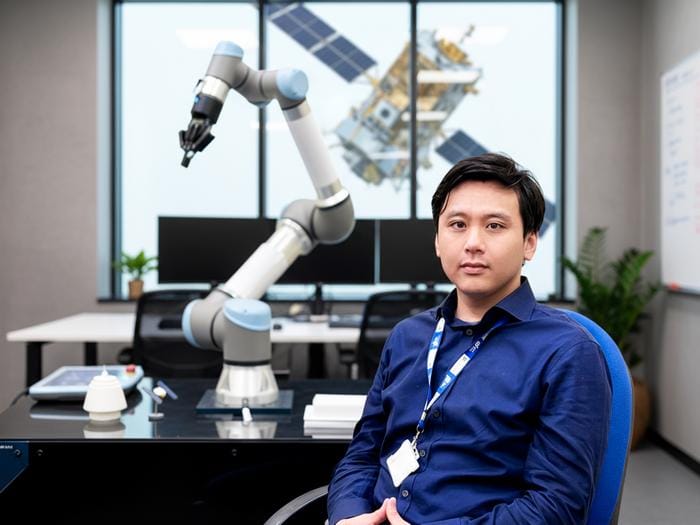
ISPARK Principal Investigator Dr Daniel Hao of the University of Leicester.

The team plans a robot-mounted arc-welding system that can work in vacuum and microgravity, with strong temperature swings and no atmosphere. These conditions make manual welding by astronauts rare and risky, so the project focuses on autonomous operation and space-qualified hardware. The welder will first be tested in vacuum on Earth and checked with digital-twin weld modelling, to understand its behaviour before any future flight in real orbital environments.

Source


💡
Would you like to receive newsletter weekly?! Subscribe for free, also get full access to the website.