

Summary
- Generates high-resolution 2D and 3D images to spot tiny defects (down to 1.5mm).
- Completely eliminates the need for hazardous radiation used in traditional radiography.
- Offers full digital recording, making inspection data easy to store and audit.
Aligning young talent with cutting-edge technology is the future of the welding industry. The latest advancements in Phased Array Ultrasonic Testing (PAUT) perfectly illustrate this opportunity for the next generation of professionals. PAUT isn't just another tool; it is a sophisticated method that uses electronically controlled ultrasonic waves to "see" inside welds with incredible clarity. Unlike older methods, it allows inspectors to scan large areas quickly without moving the probe, creating detailed volumetric images that reveal hidden cracks, porosity, or lack of fusion. For a tech-savvy generation looking for a career that mixes hands-on skills with digital analysis, this is the frontier.

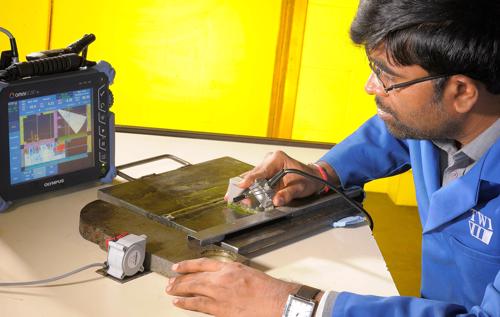
The technology stands out because it brings safety and efficiency to a new level. In the past, checking a critical pipe weld often meant clearing the area for X-ray usage, which slowed down production and introduced radiation risks. PAUT bypasses this entirely. It’s safer for the crew and offers "digital traceability," meaning every scan is recorded and can be analyzed later—just like a medical MRI for metal. Companies like Eddyfi Technologies are pushing this even further with features like Total Focusing Method (TFM), which improves detection in tricky materials like stainless steel. It turns a standard inspection into a precise, data-driven operation.
However, adopting this tech requires serious skill. The equipment is an investment—often exceeding $30,000—and it demands well-trained operators who understand both acoustics and digital calibration. It struggles a bit with rough surfaces or heavy paint, so the "human element" of preparing the job is still vital. But for the welding community, this challenge is actually a good thing. It elevates the role of the inspector from a simple checker to a highly skilled technician. If you are passionate about welding and technology, mastering PAUT is a smart move that secures your place in the industry's future.
Source:
 Mario Toyo
Discussion